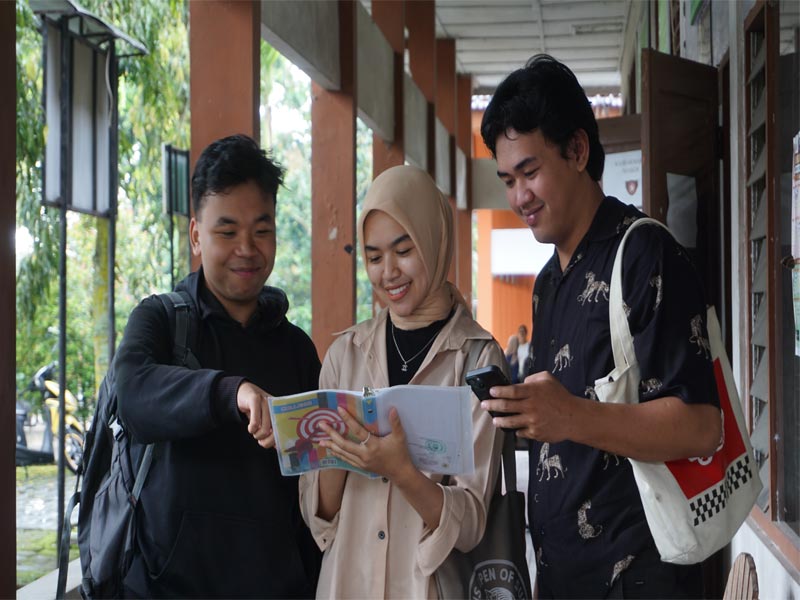
| FREE DOWNLOAD | Kelas Karyawan Brochure
Combined All Areas of Indonesia
⚾ PDF (11,2 MB)⚾ Zip (8,8 MB)
⚾ jpg (36,2 MB) | Kelas Karyawan Brochure
JABODETABEK
⚾ PDF (5,5 MB)⚾ Zip (4,4 MB)
⚾ jpg (13,2 MB) | Kelas Karyawan Brochure
Java and Bali
⚾ PDF (4,4 MB)⚾ Zip (3,5 MB)
⚾ jpg (14,5 MB) | Kelas Karyawan Brochure
West Java
⚾ PDF (2,8 MB)⚾ Zip (2,2 MB)
⚾ jpg (7,1 MB) | Kelas Karyawan Brochure
SULAWESI
⚾ PDF (1,9 MB)⚾ Zip (1,5 MB)
⚾ jpg (5,6 MB) | Kelas Karyawan Brochure
SUMATERA & BATAM
⚾ PDF (2,2 MB)⚾ Zip (1,7 MB)
⚾ jpg (6,5 MB) | Regular Program Brochure
⚾ PDF (4,1 Mb)⚾ Zip (8,4 Mb) | Collection of UN & PTN
⚾ PDF(3,5 Mb)⚾ Zip(1,5 Mb) |
|
|
| Regular Evening Class Program ~ S1, D3, S2 |
See also : » Study Programs List » Other Studies Program| Study Program Name | : | Science of Nutrition (S-1) | | Science group | : | Health | | Concentration / Specialisation | : | ✊ | | Graduate Title / Mention | : | Bachelor of Nutrition | | Title abbreviations according EYD | : | S.Gz | | Title abbreviations are popular (used public) | : | S.Gz | | PTS organizers (please click) | : | ✊ UNISA - Al -Ihya University
✊ UBUDIYAH - Ubudiyah University Indonesia
✊ IVET - Ivet University
✊ TRITUNAS - ITEKes Tri Tunas Nasional
✊ Bali dwipa University | | Study Period & Study Load (Credits) : | SMA/SMU, SMK graduates, equivalent proceed to
S1 Ilmu Gizi | Study Load = 144 - 152 sks | Study Period =
8 semester | D3, Polytechnic graduates, equivalent proceed to
S1 Ilmu Gizi | Study Load = 40 - 46 sks
(If not a piece of science additional are given 2 - 21 sks) | Study Period =
3 semester | D2, S1, D1 graduates, transfer proceed to
S1 Ilmu Gizi | Study Load = Calculated from remaining credits | Study Period =
Calculated remaining credits |
| | Curriculum / Subjects Courses | : | See below | | Prospectus (Objectives, Competencies, Job Prospects / Career Graduates) | : | See below |
Title/mention above is a title often used (not necessarily used PTS).
Regarding title (for S1, S2, S3) or mention (for diploma) which is used by universities in Indonesia currently has no standard (not standard) again, although the government has made the rules, but most colleges only obey some of the rules the. It can not be blamed, because the development of the science group is very rapid and led to new branches of science which is an integration of several scientific groups, making it difficult for universities to classify these branches of the science group that created the government.
Similarly, by making short title / mention such, people tend to create their own abbreviations that are even more popular than EYD Indonesian rule.
Below given curriculum / course and prospectus (competency, job prospects / career graduates, etc.). For subjects study program of presented here is a slice (and some combination) of a college curriculum, so it is possible some no elective courses at the college, or the slightly different name of his courses.
| Prospectus of S1 Nutrition Science |
The basic competency of the Bachelor of Nutrition is to have quality and intellectual integrity with high competitiveness, both academically and morally, able to adapt to changes, realize that science is always advancing and developing, able to browse and obtain scientific information, know how and can continuously learn in handling each problem, able to uncover the structure and core of the problem and set priorities stages of solving know and can take advantage of the usefulness of information technology can apply knowledge and knowledge capable and skilled in the field of Nutrition, public relations, and advertising can solve problems logically, utilize data / the available information can use concepts to explain things that are not / less clear able to be independent in work and efforts to be able to actively participate in working groups able to communicate with experts in other areas of expertise and take advantage of they are able to make effective use of available resources, be able to start pioneering the formation of entrepreneurial units in the field of Nutrition and / or public relations and / or advertising, able to keep up with new developments in the field of Nutrition.
Main Competencies - Able to think broadly (meta-cognitive) with a scientific foundation
- Be able to explain basic theories, science and technology, nutrition and related sciences (food science, biomedicine, humanities, and management) in a structured manner
- Being able to apply nutrition science and technology in solving nutritional problems of individuals, groups and communities through assessment of nutritional status
- Able to communicate effectively in counseling, nutrition education and dietetic services to deal with the nutritional problems of individuals, groups and communities according to the results of their studies and consider the implications
- Able to manage nutrition services based on nutritional assessment that has been standardized independently
- Being able to make decisions in the process of solving nutritional problems of individuals, groups and communities through an assessment of nutritional status and related factors
- Able to develop promotive, preventive, curative and rehabilitative nutrition services and be able to adapt to conditions of limited resources
- Able to design and manage nutritional education using media and methods according to target characteristics
- Able to design and manage food management in institutions by applying nutrition and management concepts
- correctly explains the basics of nutrition and its relation to health and food
- thoroughly examines the linkages of nutrition, health and food in a system
- studies, assesses and identifies the nutritional conditions of individuals, groups or communities
- makes interventions and nutrition services planning according to needs
- implementing nutrition interventions and services in accordance with the intervention plan
- carries out monitoring activities on the implementation of interventions and nutrition services
- carries out evaluation activities on the implementation of interventions and nutrition services
- promotes nutrition and conducts social mobilization for the prevention and treatment of nutritional problems
- understands the importance of cross-sectoral, cross-disciplinary and cross-professional collaboration in dealing with nutrition issues
- make the necessary preparations for advocacy activities in dealing with nutrition problems
- design and carry out research under the guidance of an expert or expert group
- applies the latest research results to nutrition interventions and services
Graduate ProfileNutrition Study Program graduates have the opportunity to work as:- Nutrition service decision maker.
- Nutrition service manager and care provider.
- Nutrition service supervisor.
- Nutrition education and training supervisors
- Nutrition inspirator in the community (Community Leader).
- Implementing scientific research.
- Health Services
- Fitness Center
- Beauty Center
- Food and Drug Monitoring Agency
- Food Security Agency
- Food and Beverage Industry
- Consultant Company
- R&D research and development
- Health Sector NGOs
- Training and higher education
| S1 Nutrition Science Course |
* = Concentration / Specificity / Elective Courses
| Course | SKS | | Pancasila | 2 | | Nationality | 2 | | Religion | 2 | | Indonesian | 2 | | Mathematics | 2 | | Anatomy | 2 | | Cell and Molecular Biology | 2 | | Nutrition Chemistry | 2 | | Basic Nutrition | 2 | | Food Science | 3 | | Nutrient Analysis | 3 | | Physiology | 3 | | Macro Nutrition Metabolism | 2 | | Basic Management | 2 | | Sociology and Anthropology | 3 | | Applied English | 3 | | Communication | 2 | | Public Health Sciences | 1 | | Nutrition Immunology | 2 | | Metabolism of Micro Nutrition | 2 | | Nutritional Status Assessment (Anthropometry, Biochemistry, Physical-Clinical) | 2 | | Food Consumption Assessment | 2 | | Culinary Nutrition | 3 | | Basic Nutrition Training | 2 | | Psychology | 2 | | Biostatistics | 3 | | Current Clinical Nutrition Issues *) | 2 | | Current Issues of Community Nutrition *) | 2 | | Obesity Management *) | 2 | | Basic Epidemiology | 2 | | Health Service System | 2 | | Nutrition in the Life Cycle | 4 |
| | | Course | SKS | | Clinical Biochemistry | 3 | | Food Microbiology | 3 | | Basic Sports Nutrition | 2 | | Food Safety | 2 | | Nutrigenomics *) | 2 | | Analysis of Food and Nutrition Data *) | 2 | | Nutrition Care Process (NCP) | 2 | | Dietetics and Diseases 1 | 3 | | Food Technology | 3 | | Research Methodology | 3 | | Food Management System Management 1 | 2 | | Food Security | 2 | | Bioethics | 2 | | Advanced Sports Nutrition *) | 2 | | Functional Foods and Nutraceutical *) | 2 | | Dietetics and Disease 2 | 4 | | Food Management System Management 2 | 2 | | Nutritional Epidemiology | 2 | | Nutrition Program Management | 2 | | Nutrition Management in Disasters | 2 | | Nutritional Entrepreneurship | 2 | | KKN (Inter-Semester) | 3 | | Work Nutrition *) | 2 | | Food Fortification *) | 2 | | Dietetics and Disease 3 | 5 | | Clinical nutrition work practices | 3 | | Work Practices of Food Service Management System | 3 | | Risk Group Food Program *) | 2 | | Dietetic Cuisine *) | 2 | | Implementation of the Nutrition Program | 4 | | Thesis | 6 |
| |
|
|
|
|
|